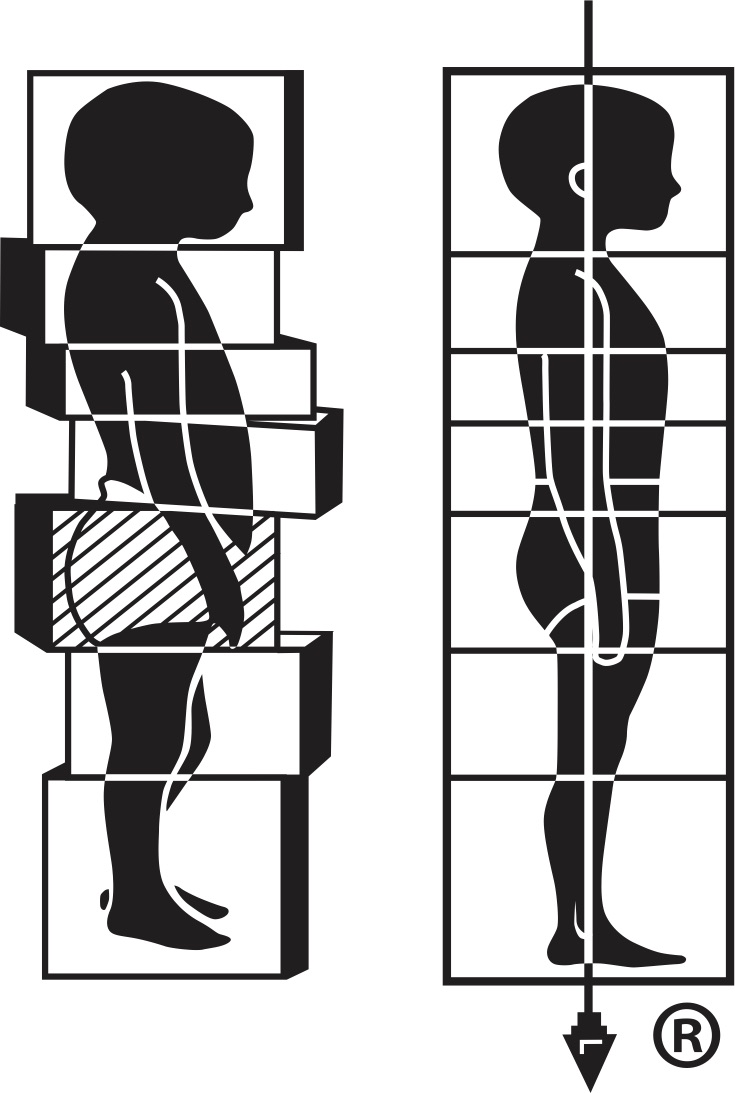
When discomfort has been part of your life for months or years, it can shape how you sit, stand, sleep and move. Rolfing works with those patterns gently and patiently, alongside the care you already receive, to help your body find more ease.
An honest word first
Rolfing does not diagnose, treat or cure disease, and it isn’t a replacement for medical care. What it can offer is a thoughtful, hands-on way to address the tension, restriction and compensation patterns that often build up around a long-term condition. Many people find that this helps them feel more comfortable and capable in daily life. Results vary from person to person, and I’ll always be straightforward with you about what to expect.
How Rolfing may help
Easing compensation patterns
When one area hurts, the rest of the body adapts to protect it. Over time those adaptations can create new strain. Rolfing looks at the whole body to address both the original area and the patterns that grew up around it.
Restoring movement in fascia
Injury, surgery, inactivity and stress can leave connective tissue tight or stuck. Slow, attentive hands-on work aims to help it soften and glide again, giving joints and muscles more room to move.
Building body awareness
Because you take part through breath and small movements, sessions help you notice how you hold yourself. That awareness can make it easier to catch habits that aggravate symptoms and choose more comfortable ways of moving.
A calmer, safer experience of touch
Living with pain can keep the nervous system on high alert. Unhurried, responsive work in a setting where you control the pace can help many people relax and feel more at home in their body.
Conditions clients often come in with
Chronic low back pain
The most studied use of Rolfing. Work often focuses on the relationship between the legs, pelvis and spine, and on how you carry your weight through the day.
Neck and shoulder tension
Common for people who spend long hours at a desk, phone or steering wheel. Sessions address head and shoulder position, breathing and the ribcage that supports them.
Tension-related headaches and jaw tightness
When headaches or jaw discomfort are linked to tension in the neck, face and upper back, gentle work in these areas may bring relief. New or changing headaches should always be checked by a doctor first.
Fibromyalgia and widespread pain
For sensitive systems, I work very lightly and slowly, with shorter sessions if that suits you better. The goal is comfort and ease, never pushing through pain.
Lingering effects of old injuries or surgery
Once you’re fully healed and cleared by your surgeon or doctor, Rolfing can help address stiffness and restricted movement around scars and previously injured areas.
Repetitive strain and postural patterns
From musicians and tradespeople to people living with scoliosis, many clients come in with patterns their body has adapted to over years. Rolfing doesn’t straighten the spine, but it can help you feel more balanced and comfortable within your own structure.
Sessions are ALWAYS tailored to your needs, typically lasting 60-90 minutes, with 3-10 visits suggested for building momentum. I incorporate breathwork, self-care education, and lifestyle coaching to maximize what you take home from this experience.
What the research says
Research on Rolfing is still young, and most studies so far are small. The most notable is a randomized pilot trial led by a researcher at Harvard Medical School and funded in part by the National Institutes of Health. It looked at Structural Integration (Rolfing) as an addition to standard outpatient rehabilitation for chronic low back pain, and found encouraging signs of reduced disability.
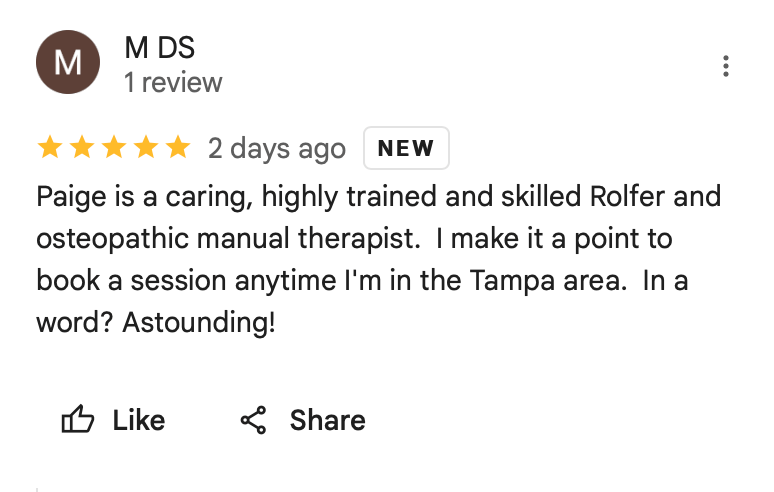
Other small studies have explored neck pain, balance and movement, also with promising but early results. I’ve been practicing for nearly 10 years and I can tell you the transformations I have witnessed in my office are profound. Of course, every BODY is different but I have made this my life work because I believe it to be an incredible tool to help the body reestablish a sense of ease.
The great part about this work is that you will know after 1 session if your body responds well. I recommend you try it out and see if it’s a good fit for you.
If you’re ready to explore support for your chronic wellness, reach out to schedule a complimentary consultation. Together, we can nurture the balance you deserve. Please call or text 656-257-5927
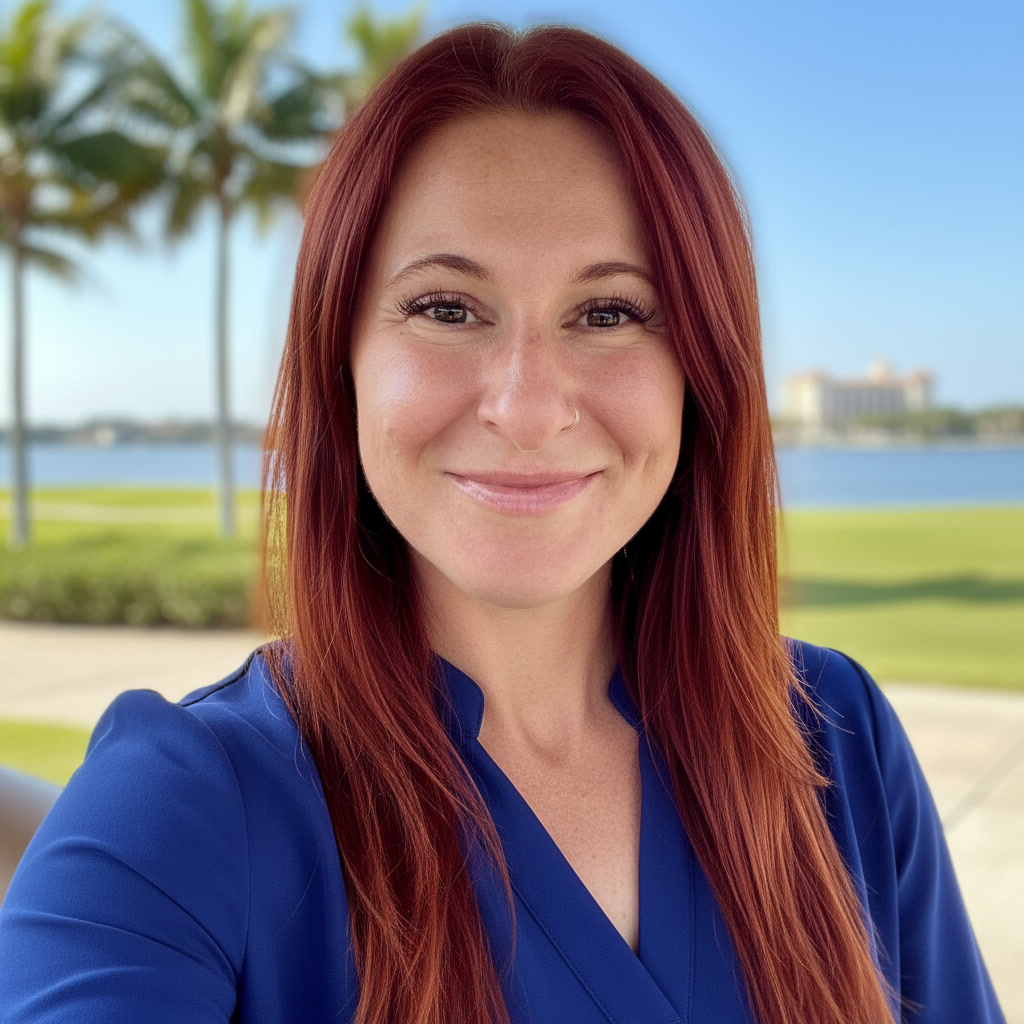
Paige Dayvis is a Licensed Massage Therapist at Center of Integration, She is a Certified Rolfer and Rolf Movement Practitioner.
Send us a message today using the form below to see if Rolfing with Paige can help you get back to doing the things you love. Mobile sessions available in Land O Lakes, Lutz, Odessa and Wesley Chapel please text or call 656-257-5927
Coming soon- 21754 State Rd 54 Suite 102 Studio A, Lutz, FL 33549.
Book your session now using the links below
Initial Visit 90 mins (First Time Clients)
These sessions are 90 minutes to allow for proper intake and a treatment.
90-Minute Treatment (Existing Clients)
These sessions are 90 minutes. This is the ideal length for those going through the initial experience.
60-Minute Treatment (Existing Clients)
These sessions are 60 minutes. Ideal for those who have done the initial experience and are looking for a tune up.
Questions?


PAIGE DAYVIS IS NOT A MEDICAL DOCTOR. SHE HOLDS A DOCTORAL LEVEL OF EDUCATION IN MANUAL OSTEOPATHIC WORK AND NAPRAPATHY. PAIGE DAYVIS DOES NOT OFFER MEDICAL ADVICE OR TREATMENT.