
Your phone weighs about six ounces. But to your neck, scrolling through it can feel more like carrying a 60-pound bag of mulch.
That’s not an exaggeration for effect. It’s physics. And it may explain the stiff neck, tight shoulders and afternoon headaches so many of us live with. Let’s look at why, and what you can do about it.
The math of a bowling-ball head
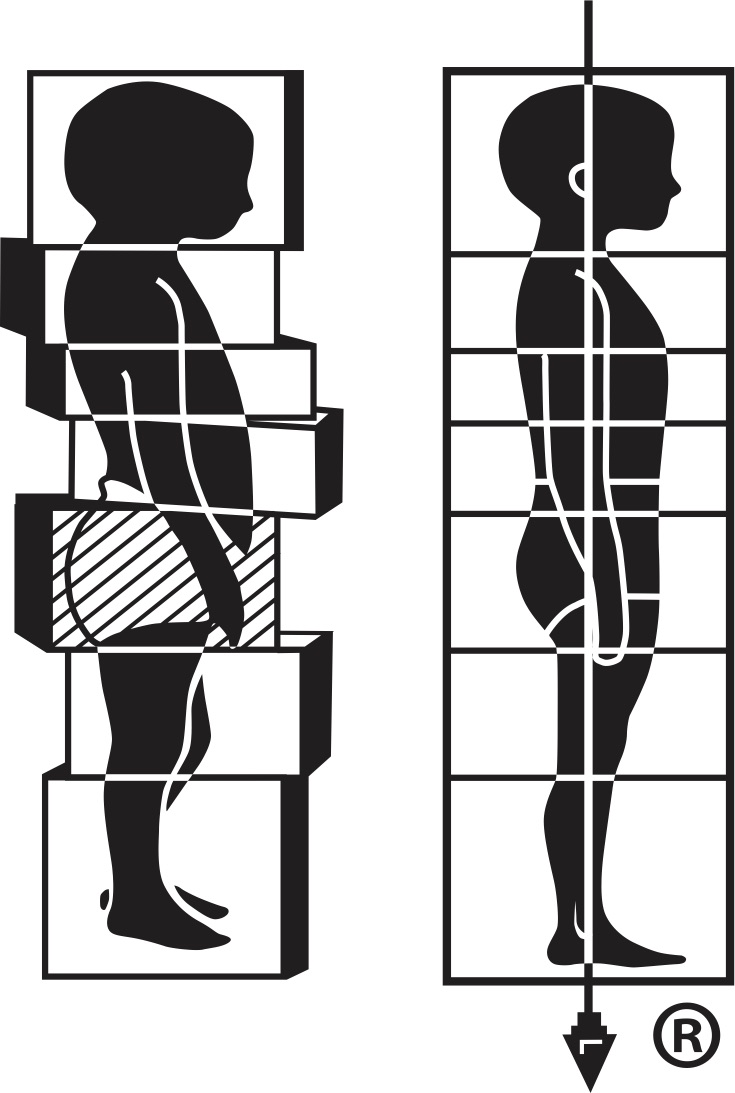
An adult head weighs about 10 to 12 pounds, roughly the weight of a bowling ball. When it sits balanced on top of your spine, your neck handles it easily.
But tip that head forward to look down, and the load on your neck climbs fast. A widely cited 2014 study by spine surgeon Dr. Kenneth Hansraj estimated about 27 pounds of force at a 15-degree tilt, and about 60 pounds at 60 degrees, a typical texting angle (source).
Now multiply that by the hours we spend looking at phones, laptops and tablets. It adds up to a lot of quiet strain on the muscles and connective tissue at the back of your neck.
It’s not just your neck
When your head drifts forward, your body doesn’t just let it fall. It adjusts. Your upper back rounds to follow. Your shoulders roll in. Your chest tightens, and your breathing gets shallower. Even your low back and hips shift to keep you balanced.
Over time, your connective tissue, called fascia, adapts to that shape and starts to hold it. That’s why “tech neck” so often comes with tight shoulders, tension headaches, jaw clenching and a mid-back ache. It’s one pattern, spread across the whole body.
Try it: three tech-neck resets
You don’t have to give up your phone. Just give your neck a few breaks.
- Bring the screen up, not your head down. Hold your phone closer to eye level, or prop it on a stand. Raise your laptop on a few books.
- Look to the horizon. Every 20 minutes or so, look up and out at something far away. Let your eyes soften and take in the whole room. Your neck gets a break, and so do your eyes.
- Let your head float. Sitting tall, feel your sit bones on the chair. Then sense the space above your head and let it rise toward it, without pulling your chin back.
Move gently, and skip anything that hurts.
How Rolfing helps
If tech neck has settled in for the long haul, resets alone may not be enough. The tissue has adapted to the forward-head shape.
Rolfing® Structural Integration works with that tissue directly. Using slow, hands-on bodywork, I help release the chest, shoulders, upper back and neck so your head can rest back over your spine again. Then we look at how you sit, stand and move, so the change lasts beyond the session. Many clients say their head feels lighter and their shoulders finally drop.
If you’re in Lutz, Land O’ Lakes, Wesley Chapel, Odessa or anywhere in north Tampa and your neck is carrying more than it should, I’d love to help lighten the load.
Paige Dayvis, Certified Rolfer™, LMT MA110456, Center of Integration, Lutz, FL. Call or text 656-257-5927, or book at paigetherolfer.com.

Paige Dayvis is a Licensed Massage Therapist at Center of Integration, She is a Certified Rolfer and Rolf Movement Practitioner.
Send us a message today using the form below to see if Rolfing with Paige can help you get back to doing the things you love.
Book your session now using the links below
Initial Visit 90 mins (First Time Clients)
These sessions are 90 minutes to allow for proper intake and a treatment.
90-Minute Treatment (Existing Clients)
These sessions are 90 minutes. This is the ideal length for those going through the initial experience.
60-Minute Treatment (Existing Clients)
These sessions are 60 minutes. Ideal for those who have done the initial experience and are looking for a tune up.
Questions?


PAIGE DAYVIS IS NOT A MEDICAL DOCTOR. SHE HOLDS A DOCTORAL LEVEL OF EDUCATION IN MANUAL OSTEOPATHIC WORK AND NAPRAPATHY. PAIGE DAYVIS DOES NOT OFFER MEDICAL ADVICE OR TREATMENT.

