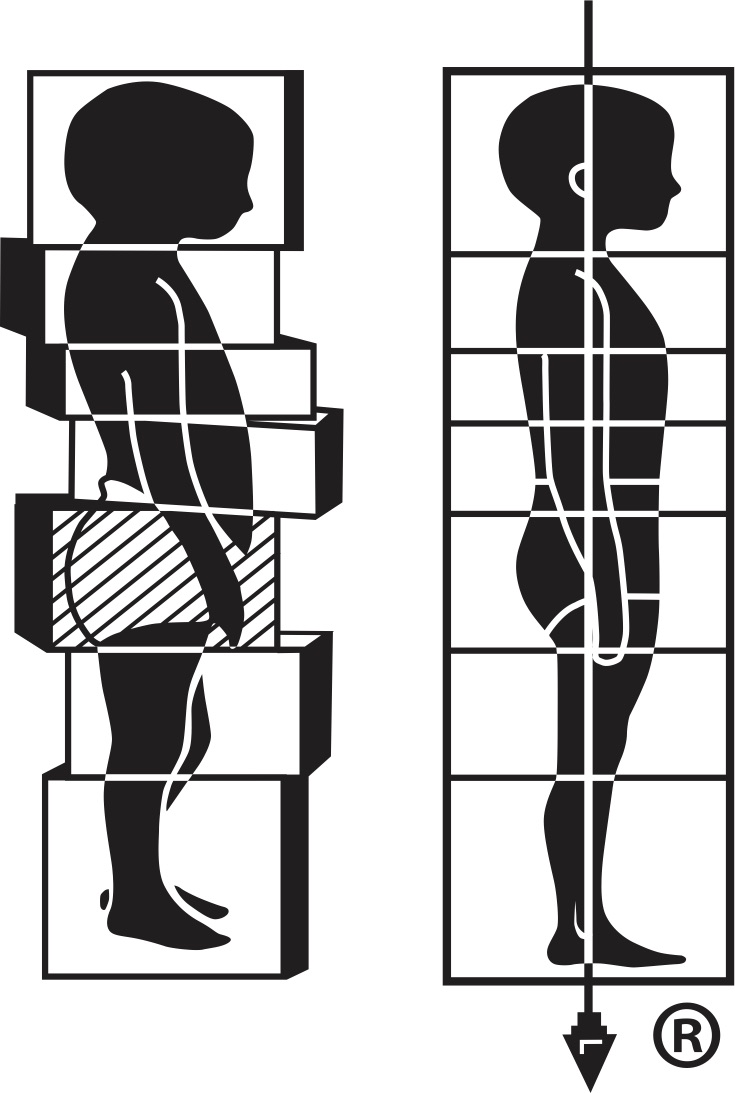
Most people think pain is caused by a single event. A bad lift, a long drive, a poor night’s sleep. That’s rarely the full story. What actually keeps pain alive is repetition. Your body isn’t just reacting to one moment; it’s replaying a pattern over and over again until it becomes the default.
This is the pain loop.
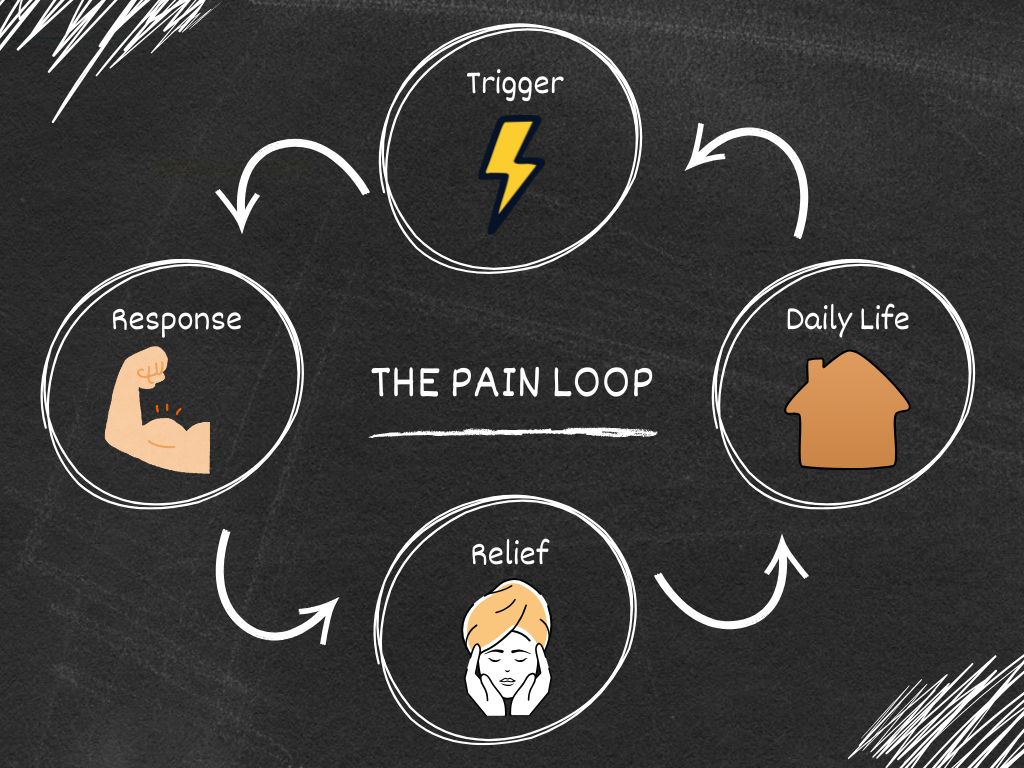
At its core, the pain loop is a cycle between structure, movement, and perception. A small imbalance, say, a forward head posture or a slightly rotated pelvis, changes how forces move through your body. That altered movement gets repeated hundreds or thousands of times a day.
Over time, tissues adapt. Some tighten, others weaken, and joints start to move in ways they weren’t designed to. Eventually, the system crosses a threshold, and pain shows up.
Take a common example: someone who works at a desk. Their head drifts forward, shoulders round, and their ribcage collapses slightly. At first, there’s no pain, just a position. But that position becomes their baseline. Every email, every meeting, every scroll reinforces it. The neck muscles start overworking to hold the head up. The upper back stiffens. Breathing becomes shallow. Weeks or months later, they develop chronic neck tension or headaches. This is not because of one bad day, but because of thousands of identical ones.
Another example: a runner with a subtle hip restriction. Maybe one hip doesn’t extend fully. The body compensates by rotating the pelvis or overusing the lower back. Each stride reinforces that compensation. It works… until it doesn’t. Eventually, the stress accumulates in the knee, hip, or back, and pain appears seemingly “out of nowhere.”
The reality is this: your body is incredibly good at adapting to dysfunction. It will find a way to keep you moving, even if that movement is inefficient or damaging over time. Pain isn’t the problem, it’s the signal that the loop has been running long enough to matter.
The key lesson is this: you don’t fix chronic pain by chasing symptoms. You break the loop.
That means identifying the repeated pattern, not just where it hurts, but how you’re moving, holding, and organizing your body throughout the day. It also means accepting that intensity isn’t the solution. More stretching, more strengthening, more force, none of that works if you’re reinforcing the same underlying pattern the other 23 hours of the day.
So what can you actually do, starting today?
First, interrupt the pattern. Set a timer every hour and change your position. Stand, walk, reach overhead, or lie on the floor for a few minutes. Variety is the simplest way to disrupt repetition.
Second, slow down your movements. Whether you’re walking, lifting, or even turning your head, pay attention to how it feels. Smooth, controlled motion gives your nervous system better input and starts to rewrite the pattern.
Third, use your breath. Deep, full breathing, especially into the sides and back of your ribcage, can help reset tension patterns that keep you locked in place.
Finally, zoom out. Look at your entire day, not just your workouts or treatments. The small, repeated positions you hold are far more influential than anything you do for an hour at the gym.
The pain loop isn’t mysterious (although it can be frustrating!). It’s mechanical, neurological, and behavioral. And once you see it, you can start to change it.
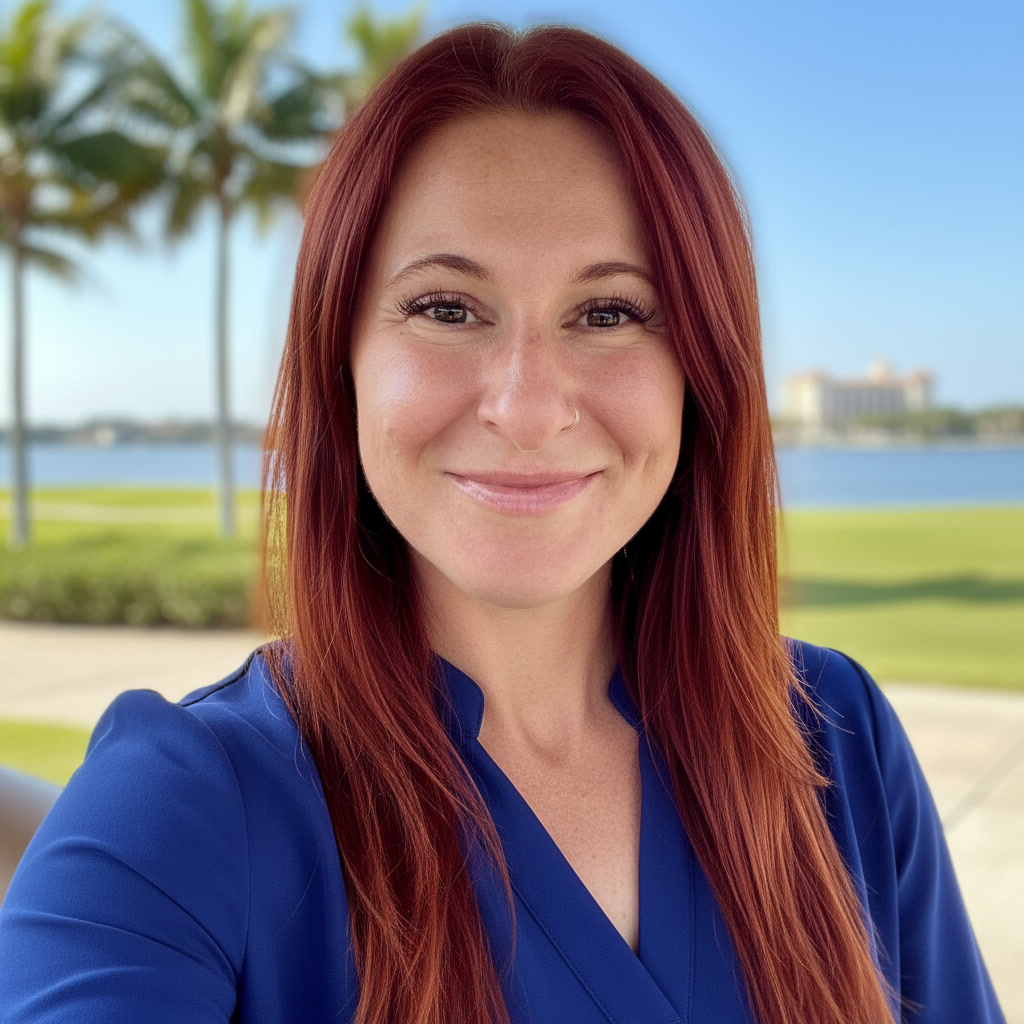
Paige Dayvis is a Licensed Massage Therapist at Center of Integration, She is a Certified Rolfer and Rolf Movement Practitioner.
Send us a message today using the form below to see if Rolfing with Paige can help you get back to doing the things you love.
Book your session now using the links below
Initial Visit 90 mins (First Time Clients)
These sessions are 90 minutes to allow for proper intake and a treatment.
90-Minute Treatment (Existing Clients)
These sessions are 90 minutes. This is the ideal length for those going through the initial experience.
60-Minute Treatment (Existing Clients)
These sessions are 60 minutes. Ideal for those who have done the initial experience and are looking for a tune up.
Questions?


PAIGE DAYVIS IS NOT A MEDICAL DOCTOR. SHE HOLDS A DOCTORAL LEVEL OF EDUCATION IN MANUAL OSTEOPATHIC WORK AND NAPRAPATHY. PAIGE DAYVIS DOES NOT OFFER MEDICAL ADVICE OR TREATMENT.

