
There is a question worth asking before you choose a study, before you set a date or send an invitation or purchase anything at all. The question is not which topic sounds interesting. The question is: what does this group actually need to move?
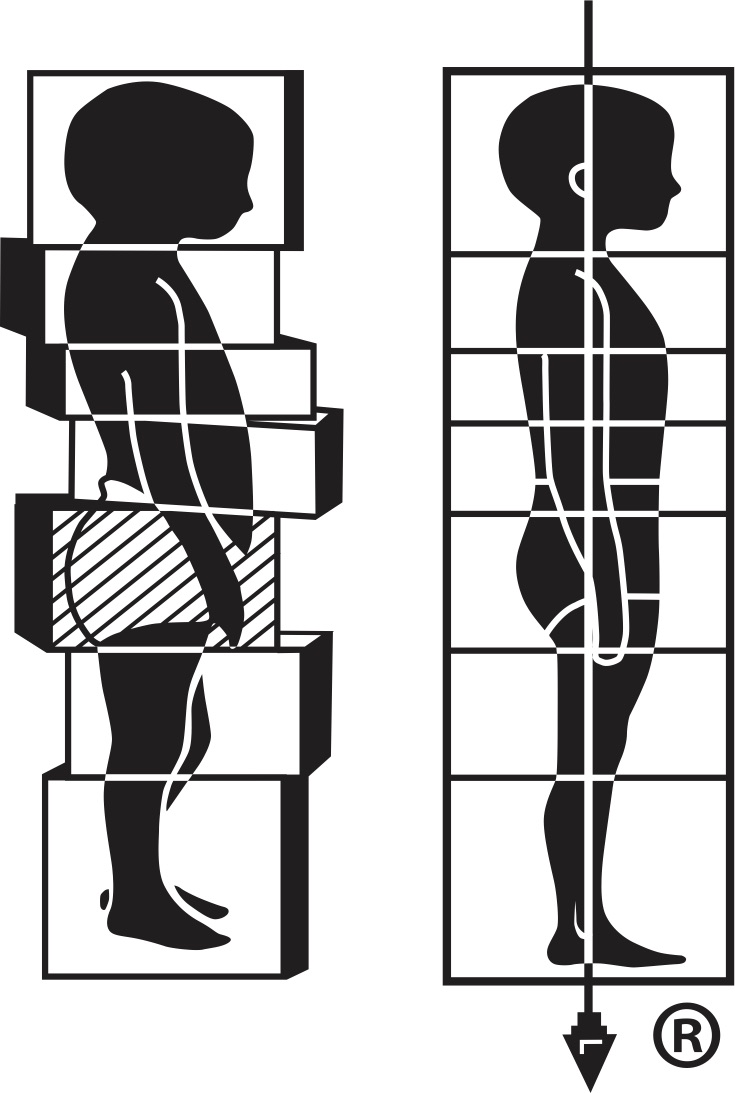
In structural bodywork, we learn early that the presenting complaint is rarely the whole story. Someone arrives with tension in their neck, and you discover the restriction lives in the connective tissue of the hip. The body does not organize its dysfunction where you expect to find it. It organizes it where it has learned to compensate. A group of people is no different. They will tell you they want a study on purpose and calling. What they may actually need is a study on identity… because you cannot move toward a calling you don’t believe you deserve.
This distinction matters when you are choosing curriculum.
Begin with the tissue, not the symptom
The philosophy of Rolfing teaches that integration is not the addition of something new. It is the restoration of what was always there, the natural order that compensation and history have obscured. When you look at your group, ask not what they are asking for, but what posture they are holding. Are they performing strength while quietly exhausted? Are they spiritually capable on the surface while something underneath has not been touched in years? Are they moving forward in life but carrying an old identity? Perhaps one that no longer fits the body they now inhabit?
These are not metaphors. They are diagnostic questions. The study you choose should meet the group where the actual restriction lives, not where they have learned to present.
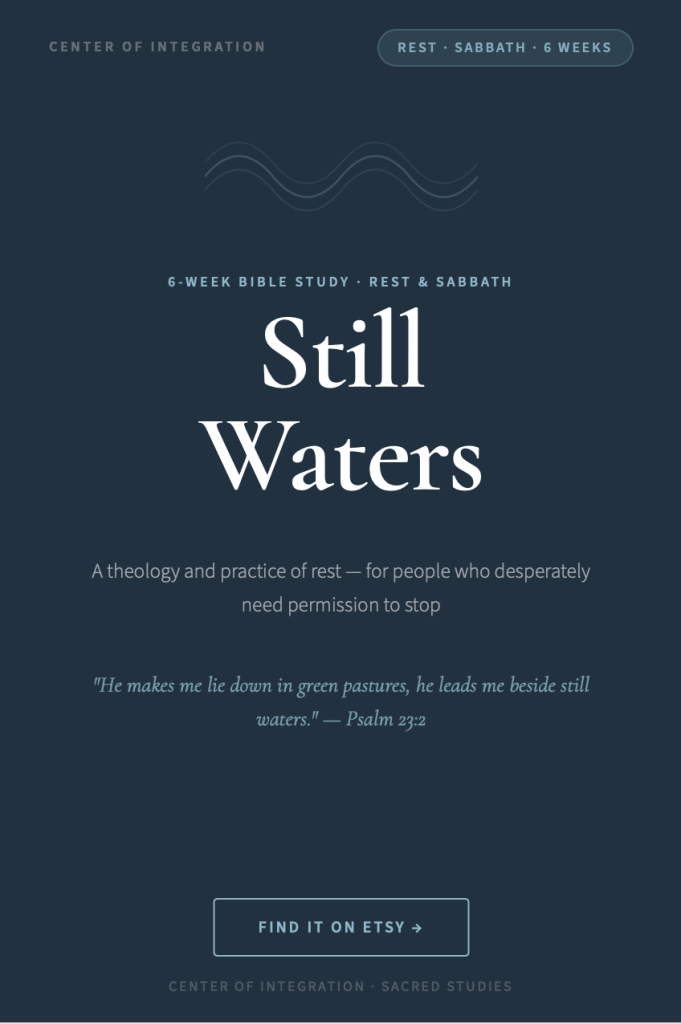
If your group is exhausted and overcommitted, Still Waters — our six-week study on Sabbath and rest — addresses the holding pattern directly. Not rest as recovery, but rest as a structural realignment of trust. What does it mean to release the grip? What is the body of your week organized around, and what would it look like to let that reorganize?
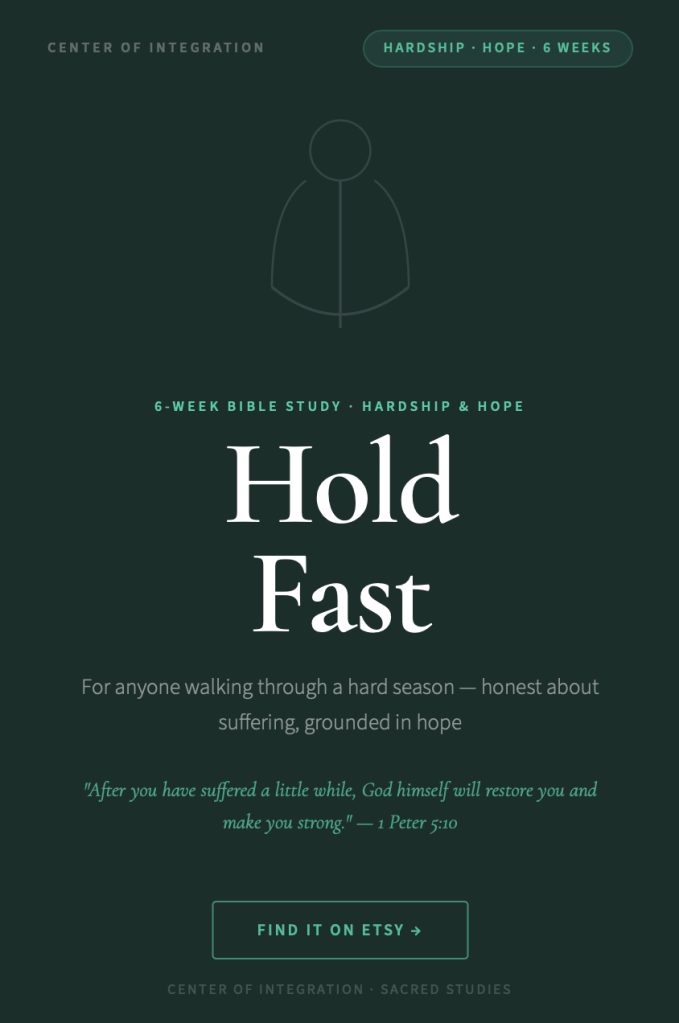
If your group is in a season of pressure, maybe relational fracture, career uncertainty or grief then begin with Hold Fast, which moves through hardship honestly before it moves toward hope. Integration cannot be rushed. The tissue must be met where it is before it will yield.
The order of intervention matters
One of Dr. Rolf’s central insights was that the sequence of intervention matters as much as the intervention itself. You do not begin at the point of maximum restriction. You begin at the edges, preparing the surrounding tissue to receive the change. Moving too quickly into the deepest work without that preparation produces resistance, not release.
The same is true of group spiritual formation. A group that has never named its grief is not ready to discuss calling. A group that is still performing certainty is not yet safe enough for honest questions about identity. Begin where there is readiness, not where the need is loudest.
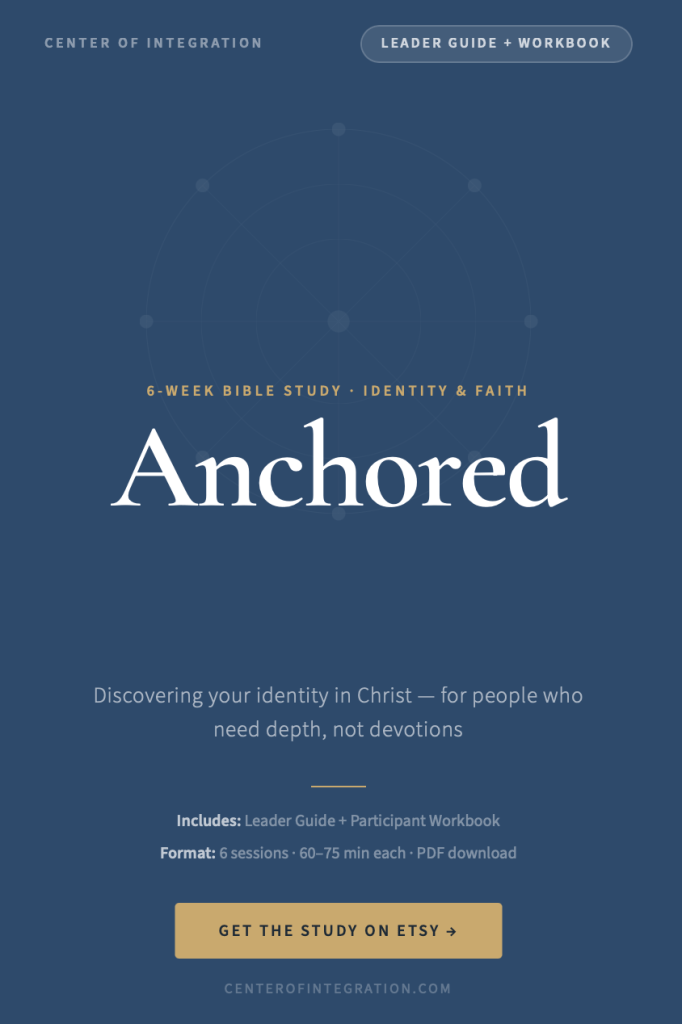
A practical sequence for a group new to depth: start with Anchored, identity, because it establishes the ground. Who are you, before what you do?
From that ground, The Full House can address the actual relationships in the room.
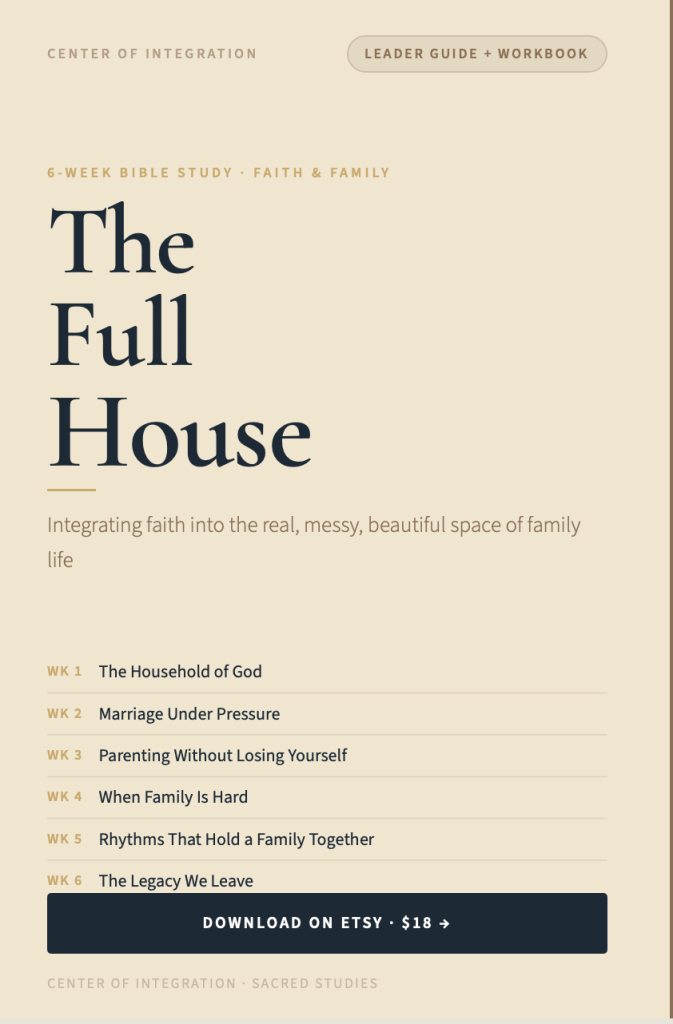
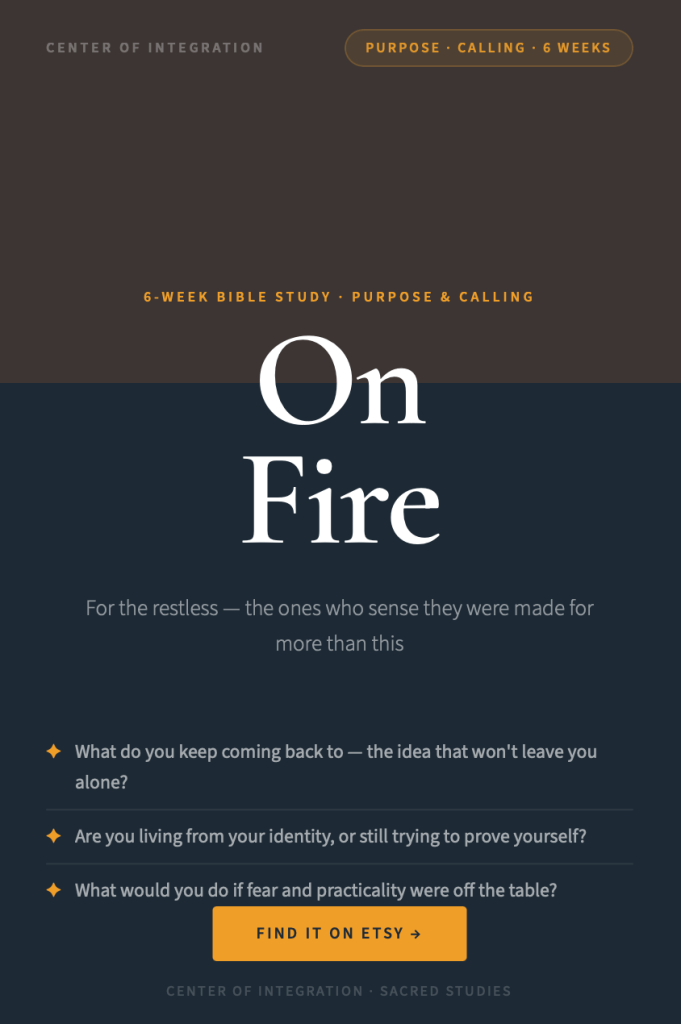
From relational honesty, On Fire becomes a question the group is genuinely prepared to sit with.
Integration is the goal, not information
A study that produces good answers has done something. A study that reorganizes how a person stands in their own life has done something else entirely. The goal of every session, every question, every week of challenge is not that participants leave knowing more about Scripture. It is that they leave inhabiting themselves differently — that the intelligence of the body, the clarity of the mind, and the ground of the spirit have moved, however slightly, toward coherence.
That is what integration means. Not the accumulation of insight. The structural reorganization of a life.
Choose the study that addresses where your group is actually held. Not where they report the tension. Where they are actually held.
The Sacred Studies series from Center of Integration includes five complete 6-week studies, each with a Leader Guide and Participant Workbook designed for small groups, life groups, women’s groups, and men’s groups. Click here to browse the full library on Etsy.
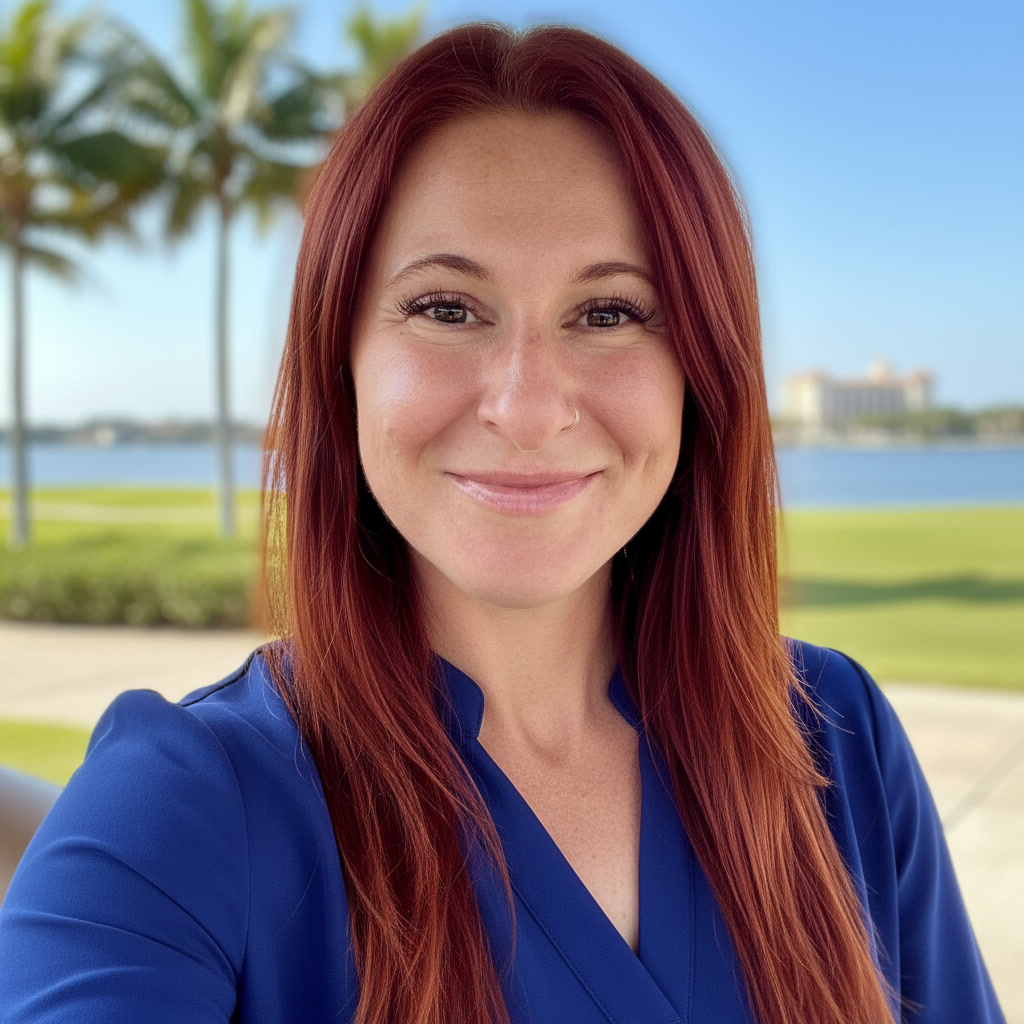
Paige Dayvis is a Licensed Ecclesiastical Holistic Practitioner at Center of Integration located at 21754 State Rd 54 Suite 102 Studio A, Lutz, FL 33549. Send us a message today using the form below to see if holistic ecclesiastical wellness work can help you get back to doing the things you love.
Book your session now using the links below
Initial Visit 90 mins (First Time Clients)
These sessions are 90 minutes to allow for proper intake and a treatment.
90-Minute Treatment (Existing Clients)
These sessions are 90 minutes. This is the ideal length for those going through the initial experience.
60-Minute Treatment (Existing Clients)
These sessions are 60 minutes. Ideal for those who have done the initial experience and are looking for a tune up.
Questions?


PAIGE DAYVIS IS NOT A MEDICAL DOCTOR OR MASSAGE THERAPIST. PAIGE DAYVIS DOES NOT OFFER MEDICAL ADVICE OR TREATMENT.
THIS IS A HOLISTIC ECCLESIASTICAL WELLNESS SERVICE ONLY.

